
Private label chocolate and confectionery from Gaziantep, for Argentine brands
Chocolate tablets and bars, dragées in doypacks and pyramid boxes, confectionery sachets, 350 g lokum boxes and pistachio spread jars, made in our factory in Gaziantep under your brand and loaded for Buenos Aires. We prepare the Spanish label content from our technical data sheet and work out from the composition which front-of-pack warning seals a line carries, before your arte final is laid out. Nothing goes to print — not a box, not a wrapper, not a jar label — until you approve it in writing.
Home / Private label / Argentina
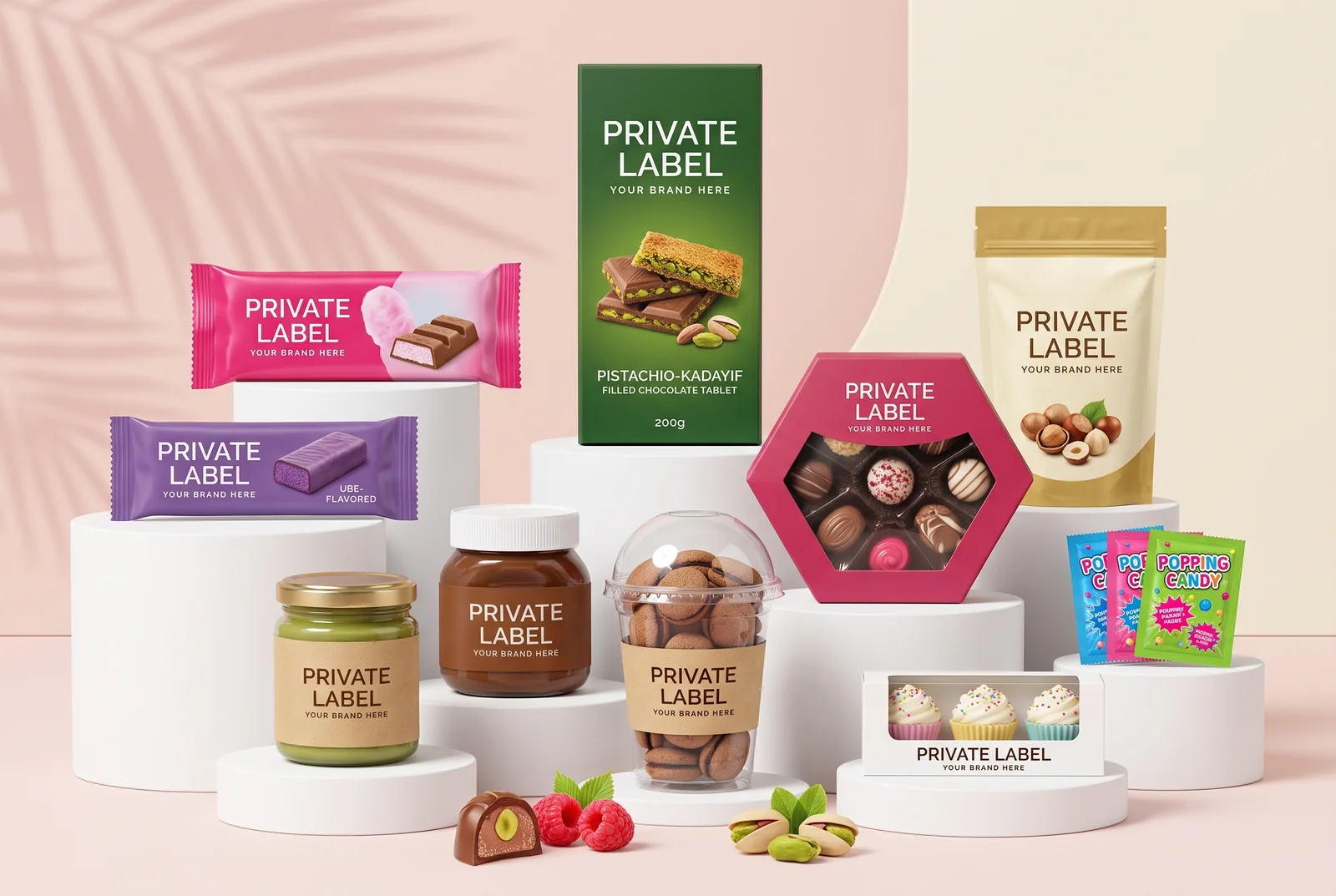
Made in Gaziantep, sold under your brand.
Argentina makes confectionery in volume itself, and a brand that wants gummies, hard candy or a plain milk tablet under its own name can have it made at home by a local co-packer; for those lines that is the shorter road, and we will say so. The wholesale searches point the same way: mayorista de golosinas, golosinas al por mayor, distribuidor de golosinas and the Once trade in Buenos Aires belong to Argentina’s own distributors, and they are typed by shopkeepers looking for a wholesaler down the road, not by brands looking for a producer abroad. We sit one step further back than that shelf. Antep Foods is a manufacturer and exporter in Gaziantep, Türkiye: we make the lines in our own factory, put them under your name, consolidate them into one load and ship to Buenos Aires.
What a domestic co-packer cannot give a marca propia is origin and breadth in one shipment. The pistachio and kadayıf bar the country has been looking up as chocolate de Dubái is made where the pistachio and the kadayıf are; so are pistachio tablets, dragées and sugared almonds for the mesa dulce, boxed lokum for the delicatessen and gift shelf — Buenos Aires has an old Middle Eastern grocery trade that already knows the product — and the pistachio spread jar. Several lines can go under one brand on one order, one set of documents and one origin proof, each line on its own pallet with its own carton count, so a first order is not limited to a single product and your own-brand lines can travel beside lines in our standard packs in the same container. The Argentine part of the work is paper and front panel: the product registration and the import formalities sit with your importer, and the warning seals follow from the composition and take space on the face of the pack, so both are settled before the arte final rather than after. The two questions a brand ends on are answered in writing: who makes it, and at what minimum. We make it in our own factory in Gaziantep; the minimum is set per line and stated in the offer.
Your label goes on lines produced in our own factory in Gaziantep.
Five formats, one container.
Nothing printed before you approve.
- 01
Line and minimum
You name the lines from the product pages and the pack format you have in mind. We confirm which of them can run under your brand, at what minimum, in what lead time, and whether the line is chocolate or a compound coating for the shelf you are aiming at. Minimums are set per line and stated in the offer, with the carton count and the pallet pattern beside them.
- 02
Label content
We prepare the Spanish label content for the Argentine market from our technical data sheet: the ingredient list with the allergen declaration, the nutrition table, metric net quantity, lot, the best before date, and the place your importer’s name and registration details go. From the same data sheet we work out which front-of-pack warning seals the composition carries, against the rules in force on the day. No threshold or figure is printed on this site, because they change.
- 03
Artwork approval
Your designer places the content and the seal area in the arte final; we check it against the label content line by line, and you approve the final version in writing. Nothing is printed before that approval — not a box, not a wrapper, not a jar label. The printing of your packaging sits inside the lead time, which is why this is the date that moves everything else.
- 04
Production and loading
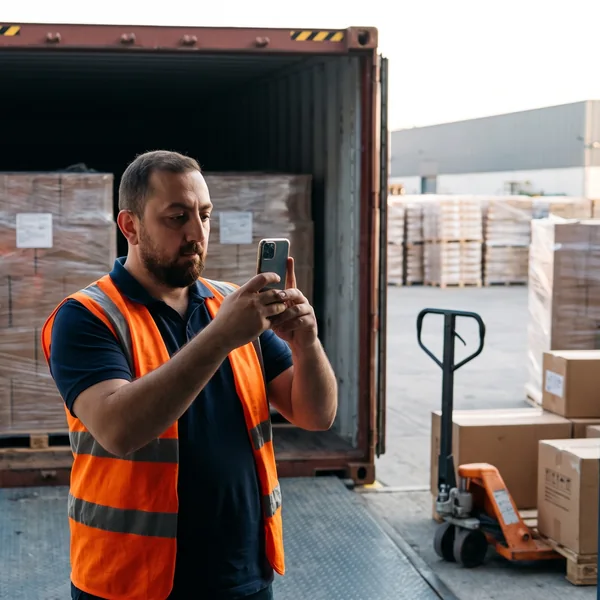
We run your lines in our factory; we check the lot before packing, consolidate the load in Gaziantep and photograph every pallet, each line on its own. The container leaves Mersin for Buenos Aires — a reefer for chocolate and chocolate-coated lines, because the crossing passes the tropics whatever the season is at home — with the document set for the Argentine entry and the origin document for the shipment.
What to know before the first list.
- Label
- A Spanish label with the mandatory information for the Argentine market: the ingredient list with the allergen declaration, the nutrition table, metric net quantity, lot, the best before date, and the importer’s name and registration details. Argentina also asks for front-of-pack warning seals on packs that meet the criteria for the nutrients concerned; that assessment is made line by line from our nutrition data before artwork goes to print. For lines in our standard packs we confirm what the export pack already carries and what the importer adds; for private label we prepare the label content from our technical data sheet and check your artwork before anything is printed.
- Registration and entry
- The product registration and the import declaration sit on the importer’s side: imported food is registered by the importer with the food authority before it is sold, and the declaration for the shipment is filed before the goods travel. The systems here have been renamed and reworked more than once, so nothing about them is printed on this site as a fixed fact; the offer states what applies on the day and which documents go with it. From our side you receive the technical data sheet per product, our certificates and the analysis report per line.
- Customs, duty and payment
- Argentina applies the Mercosur common external tariff. The offer states the tariff line and the duty that applies on the day, so the landed cost is known before you order; nothing about duty is printed on this site, because it changes. Offers are in US dollars. Bank transfer only: 50% with the order, 50% before the container leaves, against the loading photographs. The transfer route and its timing are arranged by the importer with its own bank, and the offer is written so the schedule can be matched to it.
- Certificates
- Certificates are held for our factory. Halal, kosher and food-safety scheme certificates are listed line by line with the certifying body named. Buenos Aires has a real kosher trade, and where a line is under kosher supervision the offer says which body supervises it.
- Minimums
- Set per line and stated in the offer. The unit of sale is one full container and it is panachage across lines: your own-brand lines travel beside lines in our standard packs, each on its own pallet with its own carton count, so a first order is not limited to one product.
- Lead time
- Stated per line in the offer and counted from the deposit and the approved artwork, with the printing of your packaging inside that window. Season decides when you start counting back: Pascua and Día del Niño are the chocolate weeks in Argentina, and the December gift shelf is built in the hottest weeks of the year, which is also how the container is quoted.
- Label, seals and the front panel
- The front of an Argentine pack is not free space: where a line’s profile passes the limits set for the nutrients concerned, warning seals go on it, and confectionery is squarely in that territory. Which seals a line carries follows from its composition, so the technical data sheet comes first and the assessment is made against the rules in force on the day — before the arte final, not after it. A pack aimed at the kiosco and the school-age shopper is where this bites hardest, because a sealed pack is also limited in how it may be promoted to children, so the brand block, any character and any on-pack promotion are settled at this stage rather than at the printer. No threshold or figure is published on this site.
- Registration, entry and duty
- The product registration and the import formalities are your importer’s, on your importer’s licence: imported food is registered with the food authority before it is sold, and the shipment is declared before it travels. Argentina’s import registration and licensing systems have been renamed and reworked more than once, so nothing about them is printed here as a fixed fact — the offer states what applies on the day and which documents go with it. Duty follows the Mercosur common external tariff: the offer states the tariff line and the duty that applies on the day. From us you receive the technical data sheet per product, our certificates and the analysis report per line.
- Certificates
- Held for our factory in Gaziantep: food-safety schemes, and halal or kosher on the certified lines. The certifying body is named per line, copies are available on request, and where a line is not certified we say so. We do not print certificate numbers on this site. Buenos Aires has a real kosher trade, and there the mark matters on the pack: whether a supervised line may carry it under your own brand is the certifying body’s decision, and permission is asked for in writing before the artwork is laid out.
- Currency and payment
- Offers in US dollars; we do not quote in pesos. Bank transfer, 50% with the order and 50% before the container leaves, against the loading photographs of your pallets. The transfer route and its timing are arranged by your importer with its own bank, and the offer is written so the payment schedule can be matched to it, with the delivery term, FCA Gaziantep, FOB Mersin, CIF or DAP, stated in it.
- The other route
- For gummies, hard candy and a plain milk tablet, an Argentine co-packer is closer and faster, and the golosinas wholesalers already cover the everyday shelf; we are not trying to take their place. What we cover is what has to come from origin: pistachio lines, the pistachio and kadayıf bar, dragées and sugared almonds, boxed lokum and pistachio spread — several lines under one brand, in one container. Outside that range — couverture and bulk chocolate by the kilo for the pastelería and heladería trade, pistachio paste by the kilo, raw nuts, dried fruit, cocoa and empty packaging — the rule is the same: sourced on request; we confirm composition and format before quoting.
Asked by brands first.
Are you the manufacturer?
Yes. Chocolate, dragées, pistachio and hazelnut creams, popping candy and Turkish delight are made in our own factory in Gaziantep, and we have exported since 2002. We run your private-label lines, check the lot before packing and load the container at our factory.
Who decides which warning seals go on our pack?
We do, from the composition on our technical data sheet, against the rules in force on the day, before your arte final is laid out. The seals take space on the face of the pack and they also limit how a pack may be promoted to children, so they are a design decision rather than something added at the end. If you want to know whether a different recipe or format would move a line, the question goes to our production team with the data sheet and the answer comes back in writing before anything is printed.
Who writes the label content, and who places it in the artwork?
We prepare the label content for the Argentine market from our technical data sheet; your designer places it in the arte final together with your importer’s name and registration details, and you approve the final version in writing. Nothing is printed before that approval — not a box, not a wrapper, not a jar label.
Can we start with a single product?
Your own brand can start with one line, but the shipment does not: the unit of sale is one full container and it is mixed, so your branded line travels beside lines in our standard packs, each on its own pallet with its own carton count. The minimum is set per line and stated in the offer.
Who handles the registration and the import permissions?
Your importer, on its own licence: the food registration before the goods are sold, and the declaration for the shipment before it travels. These systems have been renamed and reworked more than once in Argentina, so we do not print them here as fixed facts; the offer states what applies on the day, names our documents supplied for them, and states the tariff line and the duty that applies on the day.
Can you make turrón under our brand?
Not the turrón Argentina means. The bar sold and searched for under that name here is a local peanut and oat product we do not make, so nothing is offered under it. If you mean an almond nougat in the Mediterranean sense, that sits outside the range we hold: sourced on request; we confirm composition and format before quoting.
Can you make cobertura or pistachio paste by the kilo under our brand?
Both sit outside the range we hold: sourced on request; we confirm composition and format before quoting. The same applies to raw nuts, dried fruit, cocoa and empty packaging. Whatever is quoted, the offer states line by line whether a coating is chocolate or a compound coating — a vegetable-fat coating is not chocolate and is not named as chocolate on the pack.
Are you a private label chocolate manufacturer?
Yes. Your label is printed in our own factory in Gaziantep after you approve the artwork, and the minimum per line is stated in the offer. Prices are not published; they come in the written offer.
Importing into Argentina: what stays the same on every offer →
Send the list. We do the rest.
Send your product list with approximate quantities and the destination port. You get one offer covering every line, then one container, loaded and photographed before the doors close.
 Mixed containerHow a list becomes a container →