Private label chocolate and confectionery from Gaziantep, under a Guinean brand
Tablets, bars, dragées, gift boxes, Turkish delight and spreads in jars, made in Gaziantep under your brand. We prepare the label content in French, with English alongside where you want it, and nothing is printed before you approve it in writing.
Home / Private label / Guinea
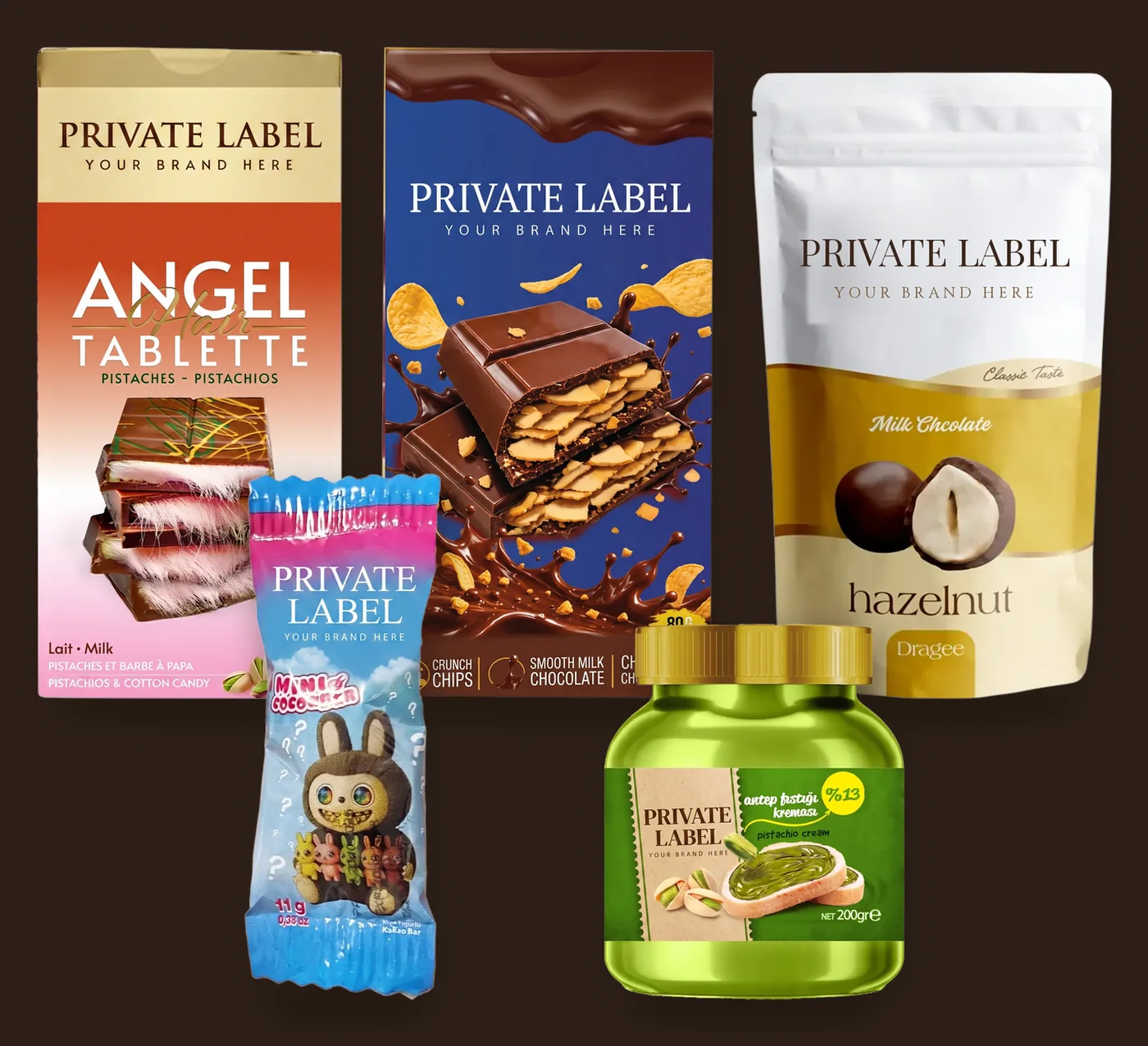
Made in Gaziantep, sold under your brand.
A distributor selling what somebody else imported is competing on somebody else's wrapper, and here that holds on both halves of the shelf for opposite reasons. The chocolate column is already mostly Turkish, and a large share of it arrives by way of a neighbouring country, so origin separates one distributor from another not at all and the reorder is decided somewhere up the coast. The sugar confectionery column is filled from the far side of the world, so the name on the pack and the format it comes in were both chosen on another continent. A private-label run answers both: a tablet, a bar, a dragée doypack or a Turkish delight box carrying your brand, made in our factory in Gaziantep that supply this market anyway, and shipped on your order rather than bought from whoever landed it first.
We are the manufacturer and exporter. Our factory is in Gaziantep; we arrange the run, prepare the label content in French, check the lot before packing, consolidate the pallets and load one container. What stays yours to decide is the line, the format, the label and the minimum, and every one of those is written into the offer before anything is made. One question we settle with you rather than for you is what the pack is allowed to claim — in a cocoa-growing country that comes up early, and it is far cheaper to answer before the artwork than after the cartons are printed.
Your label goes on lines produced in our own factory in Gaziantep.
Five formats, one container.
Nothing printed before you approve.
- 01
Lines and formats
You name the lines from the product pages and the pack format you want. We confirm which of them can be run under your brand, at what minimum, in what lead time, and whether the line is chocolate or compound for the shelf and the season you have in mind. If a format cannot be confirmed — a filled bar copied from a social feed, a pastry item, anything outside what we actually run — it is left out of the offer rather than promised and corrected later.
- 02
Label content
We prepare the French label content, with English alongside if you want it: the name of the food, the ingredient list with allergens, metric net weight, storage conditions, the importer's name and address, and the fields for the production and expiry dates we print on the pack. Every figure comes from our technical data sheet, and the wording on the pack is kept consistent with the description on the invoice.
- 03
Artwork
You send the artwork; we check it against the label content and against what the pack can physically carry, and you approve the final version in writing. Nothing is printed before that approval, and the approved file is what we run.
- 04
Production and shipping
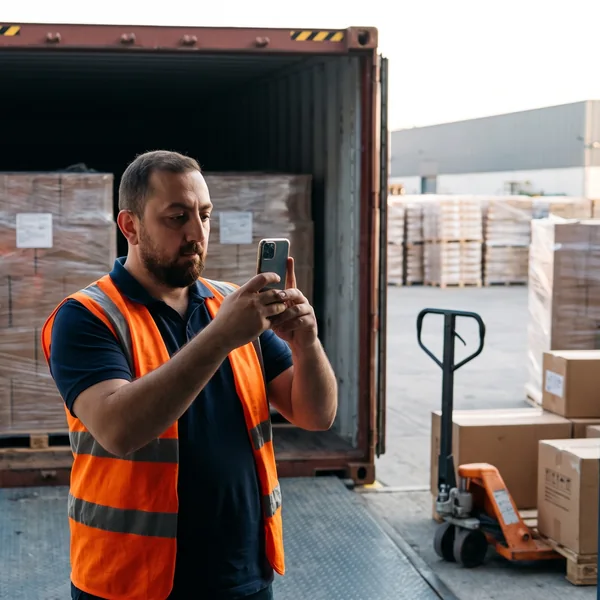
We run the line, check the lot before packing, consolidate and photograph the pallets, and the container leaves — a reefer for chocolate lines through the warm months, dry for Turkish delight, dragées and jellies — with the document set for entry, the origin document named in the offer and the halal certificates per line where they apply.
What to know before the first list.
- Label, in French — and why the counting came back in English
- The mandatory information in French, with English alongside where your file or the shelf wants it: the name of the food, the ingredient list with allergens, metric net weight, storage conditions, the importer's name and address, and the date marking. That is settled, and it is not disturbed by an odd result in our own measurement — French returned 483 raw phrases with none above the twenty-a-month threshold, while English returned a thin tail of about 170 a month. Read that as a limit of advertising-platform data in a small market, where thin samples round down to nothing, and not as evidence that anybody here shops in English. The pack speaks French. For lines in our standard packs we confirm what the export pack already carries; for own-label lines we prepare the content from our technical data sheet and check your artwork before anything is printed. One discipline we do not bend: a line coated in vegetable fat is named a compound or a glaze on the data sheet, on the pack and in the price list, never chocolate. European labelling rules do not allow that word on such a pack, and we keep the two apart everywhere, including on packs that will never see Europe — a buyer who finds out the difference at the shelf finds out too late.
- The customs file, and what the importer holds
- This file is national. The origin document and the rules that apply are named in the offer, and the offer states what applies on the day rather than this page guessing at it — regional arrangements change, and a figure printed on a web page is out of date before it is read. From our side you receive the technical data sheet per product, our certificates and the analysis report per line. Certificates are issued for our factory; we name the certifying body and send copies on request instead of describing a document we do not hold. Lines with ingredients of animal origin, gelatine in jellies above all, travel with our halal certificate and the offer names the certifying body per line. The importer holds the registration and files the consignment.
- Minimums
- Set per line and stated in the offer. The unit of sale is one full container, which can mix your own-label lines with lines in our standard packs, so a first run does not have to fill the box on its own.
- Certificates
- Held for our factory in Gaziantep: food-safety (FSSC 22000, ISO 22000, HACCP), halal and kosher certificates. The holder and the certifying body are named per line and copies are available on request. We do not describe a certificate we do not hold.
- Samples
- Free of charge from our running production; you cover the courier, paid before dispatch. Samples come off the running line, so what you taste is what the run makes.
- Lead time
- Stated per line in the offer and counted from the deposit and the approved artwork, not from the first enquiry. Printed packaging usually sets the pace, which is why the artwork step is settled before production is booked.
- What the label may not say — including about the cocoa
- Two limits, and we hold both. A vegetable-fat coating is a compound or a glaze and is labelled as one; European rules do not allow the word chocolate on such a pack, and we keep to that wherever the pack is going. The second limit is closer to home. In a cocoa-growing country a brief often arrives asking the wrapper to say something about local beans, and we will not print an origin claim we have not declared on the technical data sheet. If the declaration supports it, it goes on; if it does not, it stays off, and we say so before the artwork is approved rather than after the cartons are printed. These are the two points on which we will hold up an approval.
- Brand and artwork
- Your brand and your artwork stay yours. We run what you approved and the packaging is printed for your order; we do not offer your artwork or your recipe brief to another buyer.
- Currency and payment
- Offers in US dollars. Bank transfer: a deposit against the order and the balance before the container leaves, released against the loading photographs. The split and the banking route that applies on the day are stated in the offer and agreed in writing before production starts.
Asked by brands first.
Are you the manufacturer?
Yes. Chocolate, dragées, pistachio and hazelnut creams, popping candy and Turkish delight are made in our own factory in Gaziantep, and we have exported since 2002. We run your private-label lines, check the lot before packing and load the container at our factory.
Why put our brand on it when the chocolate here already comes mostly from one origin?
Precisely because it does. Where most of a column arrives from the same place, origin no longer separates one distributor from another — the name on the pack does, and so does controlling the format, the case weight and the reorder instead of waiting for whoever landed it first.
Can the pack say the cocoa comes from here?
Only if we declare it on the technical data sheet, and that declaration is what we print from. We are not going to write a sourcing story onto a wrapper to suit a shelf, and the question is worth raising at the first conversation rather than at the artwork stage, because it decides which lines are even worth quoting for the brief.
Who prepares the label?
We prepare the content in French, with English alongside if you want it, from our technical data sheet. You place it in your artwork, add the importer's details, and approve the final version in writing before anything is printed.
What is the minimum?
It is set per line and written into the offer, because it differs between a printed tablet, a dragée colour and a boxed Turkish delight. We do not publish a single figure on this page, since a number that is wrong for your line is worse than no number at all.
Are you a private label chocolate manufacturer?
Yes. Your label is printed in our own factory in Gaziantep after you approve the artwork, and the minimum per line is stated in the offer. Prices are not published; they come in the written offer.
Send the list. We do the rest.
Send your product list with approximate quantities and the destination port. You get one offer covering every line, then one container, loaded and photographed before the doors close.
 Mixed containerHow a list becomes a container →