Private label chocolate and confectionery from Gaziantep, under a Nigerien brand
Tablets, bars, dragées in doypacks, printed gift boxes, Turkish delight and spreads in jars, produced in Gaziantep under your own name. The label content is prepared in French, the minimum and the lead time are written per line, and nothing goes to print until you have approved it.
Home / Private label / Niger
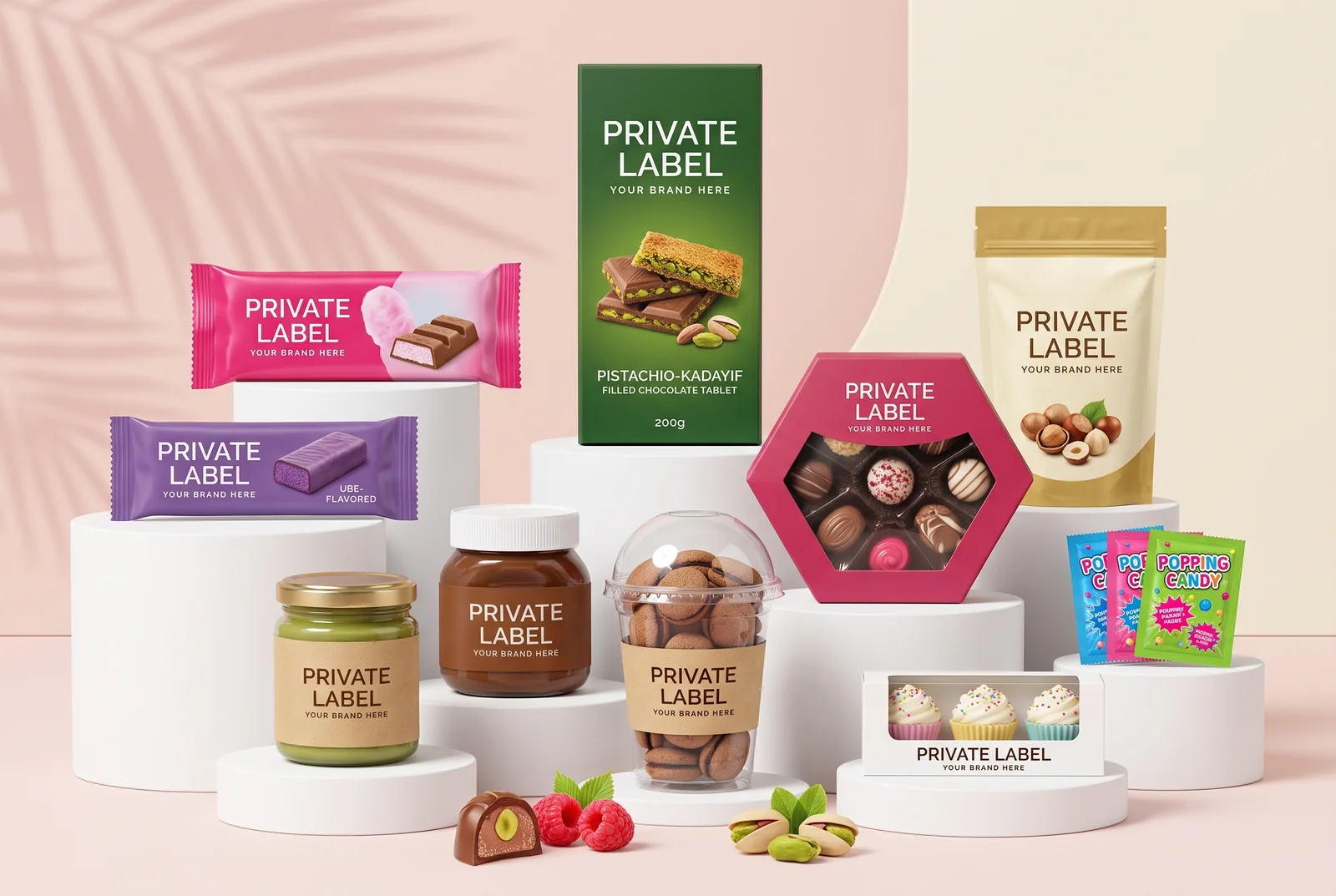
Made in Gaziantep, sold under your brand.
Both halves of this shelf are decided somewhere other than here. The chocolate arrives overwhelmingly from one origin, so origin separates one distributor from another not at all; the sugar confectionery arrives through a long chain from a long way off, so the pack, the format and the reorder date are set by someone who has never seen your counter. A private-label run is the way out of that: a tablet, a bar, a dragée doypack or a Turkish delight box carrying your name, made in our factory in Gaziantep, and shipped on your order rather than bought from whoever imported it first.
We are the manufacturer and the exporter, so there is no middleman between the factory and the container. Our factory is in Gaziantep; we book the run, draft the French label content, inspect the lot before it is packed, consolidate the pallets and load one container. Because nothing reaches Niger by sea, the route goes into the offer beside the product: the port of discharge we are quoting against, the crossing assumed for the road leg, and the delivery term. Printed packaging and a long overland run are the two parts of this job that cost the most when they are got wrong, which is why both are settled on paper first. The line, the format, the label and the minimum stay your decisions, and each is fixed in the offer before anything is made.
Your label goes on lines produced in our own factory in Gaziantep.
Five formats, one container.
Nothing printed before you approve.
- 01
Lines and formats
You pick the lines from the product pages and say what pack you want them in. We confirm which of them can be run under your name, at what minimum, in what lead time, and whether the line is chocolate or compound for the shelf and the season you have in mind. Whatever cannot be confirmed is left out of the offer rather than carried into it as a maybe.
- 02
Label content
We draft the French label content, with English or Arabic beside it if you want a second language: name of the food, ingredient list with allergens, metric net weight, storage conditions, the importer's name and address, and the fields we print for the production and expiry dates. Every figure is lifted from our technical data sheet. We also keep the pack wording, the invoice description and the transit document description word for word identical, because on an overland entry those three papers are read against each other.
- 03
Artwork
You send the artwork. We read it against the label content and against what the pack can physically carry, then you sign off the final version in writing. Nothing goes to print before that sign-off, and the file you signed off is the file we run.
- 04
Production and shipping
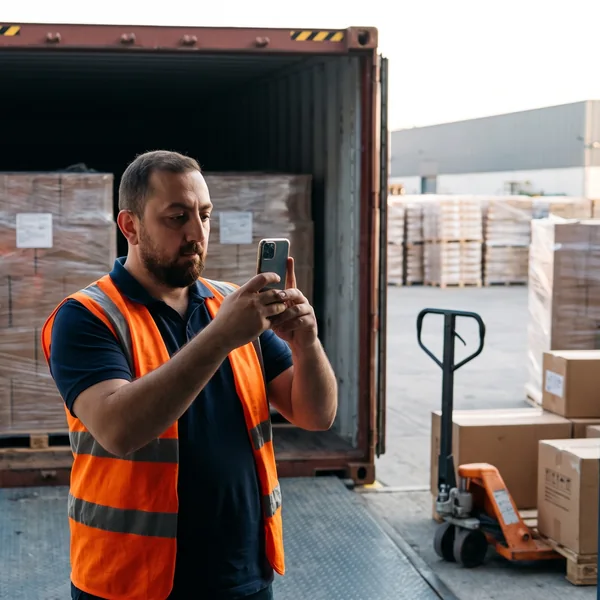
We run the line, we inspect the lot before packing, the pallets are consolidated and photographed, and the container leaves — reefer for chocolate lines through the warm months, dry for Turkish delight, dragées and jellies. With it go the documents for transit and entry, the origin document named in the offer, and our halal certificates on the lines that carry them.
What to know before the first list.
- Label, in French
- French carries the mandatory information, with English or Arabic beside it where your file or your shelf calls for it: the name of the food, the ingredient list with allergens, metric net weight, storage conditions, the importer's name and address, and the date marking. On lines in our standard packs we tell you what the export pack already carries before you order it; on own-label lines we build the content from our technical data sheet and read your artwork against it before a printing plate is made. There is one line we do not cross. A coating made with vegetable fat is a compound or a glaze — on the data sheet, on the pack, in the price list — and never chocolate. European labelling rules reserve that word, and we keep to the distinction even on a pack that will never reach Europe, because a buyer who learns it at the counter learns it too late.
- The customs file, and what the importer holds
- The entry file here is national, and the offer states the position on the day it is written rather than this page pretending to know it: regional arrangements and the rules hanging off them move, and anything printed on a web page ages before it is read. What the offer does name is the origin document and the rule set being relied on. From our side the paperwork that travels is the technical data sheet per product, our certificates, the analysis report per line. Certificates are held for our factory; we name the certifying body and send copies on request instead of describing a document we have not held. Where a line carries ingredients of animal origin — gelatine in jellies most often — copies of our halal certificate are available on request and the offer names the body that issued it. Registration, the entry itself and the instruction to the transit agent stay with the importer.
- Minimums
- Set per line and written into the offer, because a printed tablet, a dragée colour and a boxed Turkish delight do not share a figure. The unit of sale is one full container, and your own-label lines can travel in it beside lines in our standard packs, so a first run does not have to fill the box on its own.
- Certificates
- Certificates are held for our factory — food safety, halal and kosher. The offer names the holder and the certifying body line by line, and copies are available on request. We issue none of them ourselves, and we will not describe a certificate we have not had in our hands.
- Samples
- Free of charge from our running production; you cover the courier, paid before dispatch. They come off the line that is running, so what you taste is what a run would make.
- Lead time
- Written per line in the offer and counted from the deposit and the signed artwork, not from your first message. Printing is usually what sets the pace, which is why artwork is closed before a production slot is booked. The overland leg is quoted apart from the production time, so the two are never quietly added together.
- What the label may not say
- A vegetable-fat coating is a compound or a glaze, and that is what goes on the label. European rules do not let it be called chocolate, and we apply the same rule to every pack we print. Whatever a brief asks for, the word chocolate does not go on a pack that is not chocolate, and the price list keeps the two apart for the same reason. This is the single point on which we will stop an artwork sign-off and wait.
- Brand and artwork
- The brand is yours and so is the artwork. We run the file you signed off, the packaging is printed against your order, and neither your artwork nor your recipe brief is shown to another buyer.
- Currency and payment
- Quotes in US dollars. Payment by bank transfer: a deposit with the order, the balance before the container moves, released against the loading photographs. The split and the banking route that works on the day are written into the offer and agreed before we book the run.
Asked by brands first.
Are you the manufacturer?
Yes. Chocolate, dragées, pistachio and hazelnut creams, popping candy and Turkish delight are made in our own factory in Gaziantep, and we have exported since 2002. We run your private-label lines, check the lot before packing and load the container at our factory.
Why put our brand on it when the chocolate here already comes mostly from one origin?
Precisely because it does. Where most of a shelf arrives from the same place, origin no longer separates one distributor from another — the name on the pack does, and so does controlling the format, the case weight and the reorder date instead of waiting for whoever imported it first.
Who prepares the label?
We do, from our technical data sheet — in French, with English or Arabic beside it if you want a second language. You drop it into your artwork, add the importer's details, and sign off the final version in writing. Nothing is printed before that sign-off.
What is the minimum?
We set it per line and write it into the offer, because a printed tablet, a dragée colour and a boxed Turkish delight do not carry the same figure. We deliberately print no single number on this page: a minimum that is wrong for your line is worse than none at all.
Does the overland route change anything for an own-label run?
It changes the calendar more than the product. Printing is booked before production and the road leg after the port is quoted separately, so you can see which part of the wait is ours and which part is the route. We also keep the pack wording, the invoice description and the transit document description identical, because on an overland entry those papers are compared with each other, and a private-label name that appears in three slightly different forms is the kind of detail that stops a truck.
Are you a private label chocolate manufacturer?
Yes. Your label is printed in our own factory in Gaziantep after you approve the artwork, and the minimum per line is stated in the offer. Prices are not published; they come in the written offer.
Send the list. We do the rest.
Send your product list with approximate quantities and the destination port. You get one offer covering every line, then one container, loaded and photographed before the doors close.
 Mixed containerHow a list becomes a container →