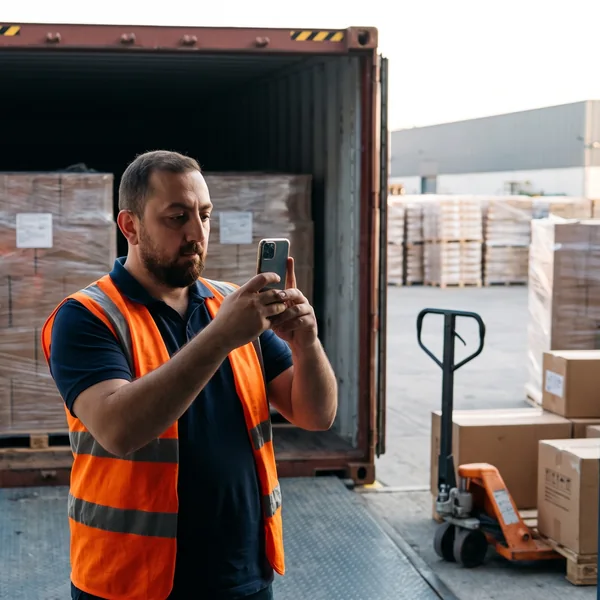
The first three hours are a road
The load starts inland on our side too. Chocolate, dragées, Turkish delight, wrapped confectionery and spreads in jars are made in our Gaziantep factory and loaded into one container, and Mersin port is about three hours away by road.
From Mersin the box travels by water to a port on the West African coast. What remains after discharge is a truck, a border post and an inland yard — the last stretch every carton on your shelf already takes.
Transit, or entry at the coast
A container bound inland crosses a coastal state, and it can do that two ways. In transit it stays sealed under a file opened at the port and closed when the box crosses into your country, where you file the entry. Entered at the coast instead, it reaches you as goods already imported once.
Different paperwork, different agents, a different declarant — and only one puts your name on the customs entry. Settle it with your clearing agent before the offer is signed; the offer names the port of discharge, the routing and the document set.
Four terms, and where each one stops
FCA Gaziantep, FOB Mersin, CIF and DAP. What separates them is not price but the point where cost and risk change shoulders. FCA hands you the container at the loading bay, FOB once it is on board; both suit a buyer already running a forwarder.
CIF ends at a named port of discharge, still a border and a long drive short of your warehouse. DAP crosses the border, to a place you name. Whichever is quoted, the place is named beside it.
Why the import table reads like a coastline
The only figures here are mirror figures: this country does not report its own, so the table is assembled from everyone else’s export records. On 2024 mirror data about 8,665,399 US dollars of chocolate and 7,171,892 of sugar confectionery arrived, Türkiye sixth in both at roughly 6.32 and 4.05 per cent.
Read the top of those columns as a route, not a ranking: chocolate from Côte d’Ivoire 32.3 per cent, Morocco 16.6, Senegal 13.8; confectionery from Togo 36.9, Morocco 16.6, India 15.5. The country that records an export is the one whose paperwork the goods left on, not always where the bar was made.
The label is part of the file, and it is in French
Mandatory content in French, English alongside where the shelf wants it: the name of the food, the ingredient list with allergens, metric net weight, storage conditions, the importer’s name and address, the date marking. For own-label lines it is drafted from our technical data sheet; nothing is printed before you approve the artwork.
Two naming rules hold at every desk: a line coated in vegetable fat is a compound or a glaze on the data sheet, the pack and the price list, never chocolate; the jar line is a spread. Certificates are issued for our factory, and each line is named in the offer (how we work).
Temperature past the coast, and the list that starts it
A cold chain booked only as far as the water ends at the water. Chocolate and chocolate-coated lines are quoted in a reefer for the sea leg through the warm months; Turkish delight, dragées and jellies travel dry, and both share one box (mixed container). The inland leg is where temperature is hardest to hold, so the offer names the reefer lines.
Send the lines you want priced with a format and quantity for each, the port you use, the town they travel to inland and the term you prefer; the written offer follows within two working days. Couverture, bulk chocolate by the kilo, raw nuts, dried fruit, cocoa, halva, tahini and baklava are outside the range, sourced on request with composition and format confirmed before quoting.Tell us what the first container should carry.
There is no seaport here. Where does the container actually land?
At a port on the West African coast, where it is discharged and moved on by road across a border to you. That inland stretch is the part worth pinning down in writing, so the offer names the port of discharge, the intended routing and the document set, and your forwarder confirms the schedule and the border formalities for the routing you book.
Should the goods travel in transit or be entered at the coast?
Your clearing agent decides that, and it is worth deciding before the offer is signed. In transit the box stays sealed to your border and you file the entry; entered at the coast, it is cleared there and reaches you as goods already imported once. The two use different agents and a different declarant, so the document set is checked against the transit requirement and the entry requirement together before the container leaves us.
Which language does the label need, and who answers for it?
French for the mandatory information, with English alongside where your file or the shelf wants it. The importer of record files the entry and answers for the description given; our side supplies the technical data sheet per product, the analysis report per line and our certificates, issued for our factory. The origin document and the rules that apply are named in the offer, in the form valid on the day it is issued.