Private label chocolate and confectionery from Türkiye, for Salvadoran brands
Tablets and bars, dragées in doypacks and pyramid boxes, sachets and flowpacks, 350 g lokum boxes and pistachio spread jars, made in Gaziantep and packed under your own name for the Salvadoran shelf. We prepare the Spanish label content from our technical data sheet, to the Central American technical regulation for prepackaged food that El Salvador applies. Nothing is printed — no wrapper, no sleeve, no box, no label — until you approve the final artwork in writing.
Home / Private label / El Salvador
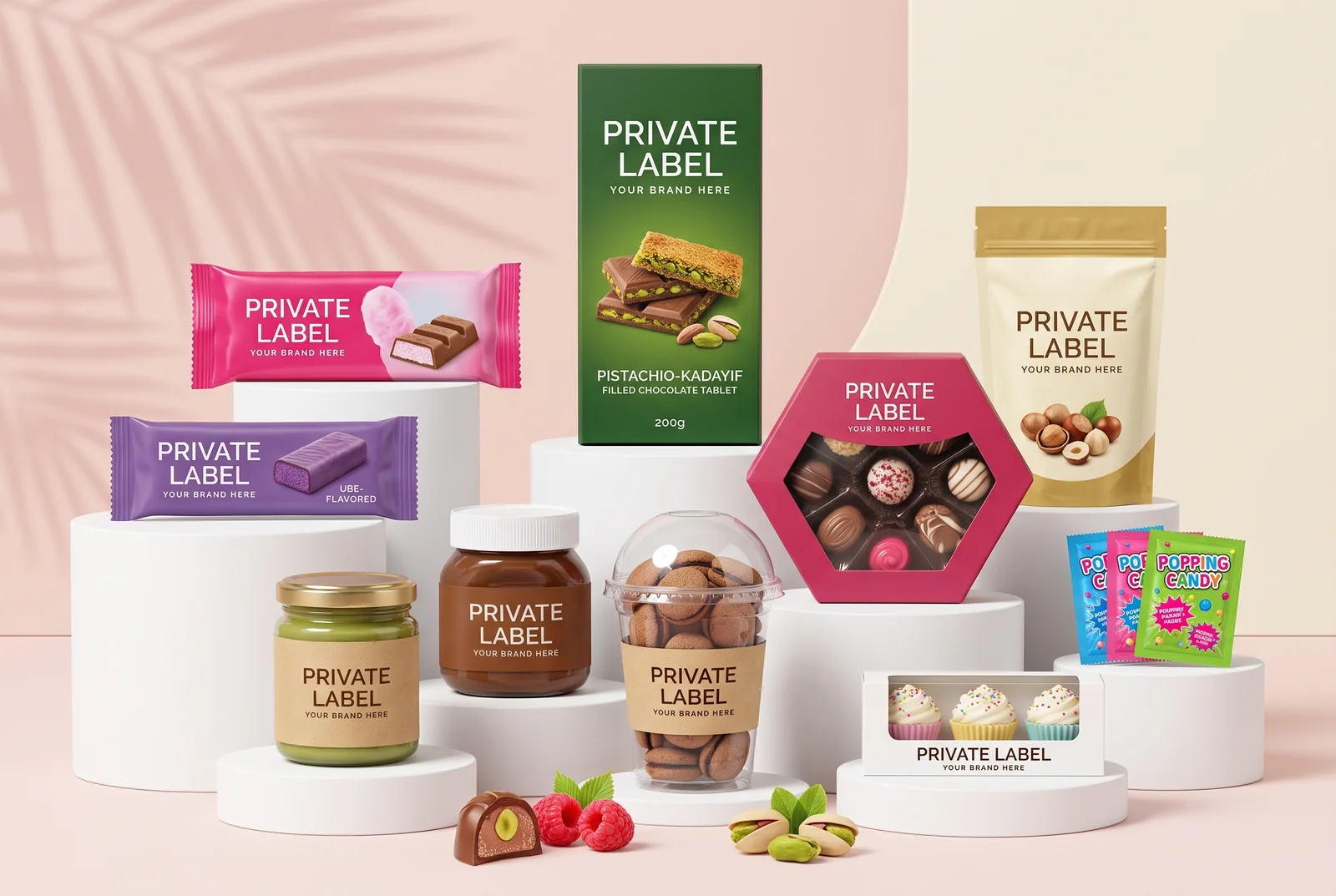
Made in Gaziantep, sold under your brand.
A Salvadoran importer, a supermarket group or a brand that wants a line of its own usually starts with what can be run nearby: a wrapped sweet, a biscuit, a bag of jellies, from a plant in the country or, as often, from a co-packer across the border. That route works until the buyer wants something the line cannot follow — a pistachio tablet from where the pistachio grows, sugared almonds in the colours of a wedding or a bautizo table, a boxed Turkish delight for the December gift shelf, pistachio spread in a jar for the shopper asking for crema de pistacho, or the pistachio and kadayıf bar that people here now ask for by name as chocolate de Dubai. We are the other route: a manufacturer and exporter in Gaziantep, Türkiye, putting our own lines under your name and loading one container for Acajutla — or writing the offer for a regional Atlantic port and the road in, if that is how your warehouse is fed.
The difference is width in one shipment, and the origin behind it. A Salvadoran brand can put its name on a pistachio tablet, a Dubai style bar, dragées in its own colours, a 350 g lokum box and a pistachio spread jar at the same time, from our own factory, on one order and one set of documents — and none of those lines has to fill a container by itself, because the box is mixed and your own-brand lines travel alongside lines in our standard packs, each on its own pallet. From there two things set the timetable, and neither of them is price. The first is the label: the sanitary registration is held by the importer and granted on the product, so on an own-brand line the file is opened in your name and the printed pack and that file have to say the same thing, word for word. The second is the calendar, because the country is warm in every season, chocolate lines are quoted in a reefer year round, and a December shelf is counted backwards from the week the boxes must be in the warehouse. The rest is the question a buyer asks last and should ask first: who actually makes it, and how little can be run. We make it in our own factory in Gaziantep; the minimum is set per line and stated in the offer.
Your label goes on lines produced in our own factory in Gaziantep.
Five formats, one container.
Nothing printed before you approve.
- 01
Line and minimum
You name the lines from the product pages and the pack format you want them in. We take that list and confirm which lines can be run under your brand, whether each one is chocolate or compound coated, the case and pallet configuration, and the minimum — set per line and stated in the offer.
- 02
Label content
We prepare the Spanish label content from our ficha técnica, to the Central American technical regulation for prepackaged food: the name of the food, the ingredient list with the allergens declared, net content in metric units, lot, storage, expiry, country of origin, and the name and address of the importer in El Salvador. The content comes from the data sheet; where the data sheet does not answer, we check with production rather than fill the gap in.
- 03
Artwork approval
You place that content in your arte final. We read the layout back against the data sheet line by line — declared allergens, net content, the coating description, the producer and the origin — and you approve it in writing. Before that written approval nothing is printed: no wrapper, no sleeve, no box, no label, and no sample in your own pack.
- 04
Production and loading
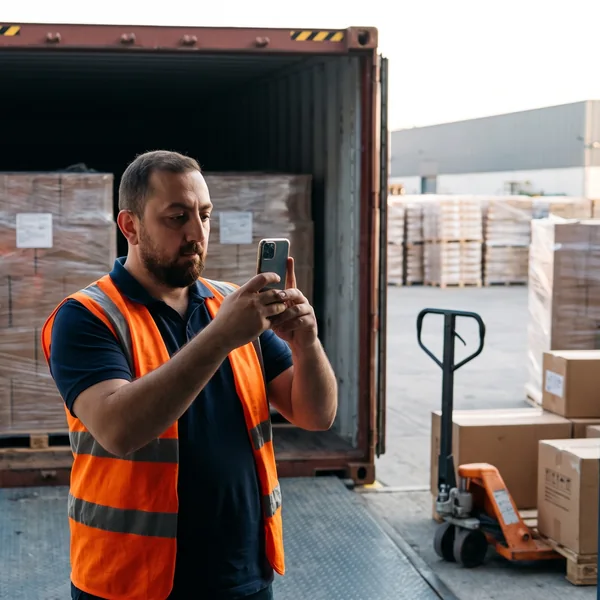
We run the line, check the lot before packing, consolidate the pallets and photograph them. Your own-brand line is loaded into the same container as the rest of the order, each line on its own pallet, and the box leaves Mersin with the document set the importer’s file needs. Chocolate and chocolate-coated lines are quoted in a reefer year round on this route, because the heat here is the crossing, the port at Acajutla and the road up; lokum, dragées, jellies and wrapped confectionery travel dry.
What to know before the first list.
- Label
- A Spanish label prepared to the Central American technical regulation for prepackaged food that El Salvador applies: the name of the product, the ingredient list with the allergens declared, net content in metric units, the lot, the production and expiry dates, storage instructions and the name and address of the importer. For lines in our standard packs we confirm what the export pack already carries; for private label we prepare the label content and check your artwork against it before anything is printed.
- Entry, registration and certificates
- The importer holds the sanitary registration for the product with the health authority and files the import declaration with Salvadoran customs. From our side we supply what that file needs: the technical data sheet, the analysis report per line and our certificates, together with the papers that travel with the shipment. The registration is filed against our factory.
- Customs
- El Salvador applies the Central American common external tariff, and there is no free trade agreement between Türkiye and El Salvador. The offer states the tariff line and the duty that applies on the day, so the landed cost is known before you order; import VAT is settled by the importer at clearance.
- Minimums
- Set per line and stated in the offer. The unit of sale is one full container, mixed, so an own-brand line travels in the same box as other lines, each on its own pallet. A first order is not limited to one product, and a new brand does not have to launch on a single item.
- Lead time
- Stated per line in the offer and counted from the deposit and the written artwork approval, not from the first enquiry. The sea leg and the transshipment are added on top of it. A December shelf is planned backwards from the week the boxes have to be in the warehouse, which in practice means the artwork is settled long before the season is being talked about.
- Certificates
- Held for our factory in Gaziantep: the food-safety certification the plant is audited to, halal or kosher on the lines that carry it, the technical data sheet and the analysis report per line. The holder and the certifying body are named per line and copies are available on request. We do not put a certificate on an offer that we do not hold, and we do not issue one in our own name.
- Currency and payment
- Offers in US dollars, FCA Gaziantep, FOB Mersin, CIF or DAP. El Salvador prices in the same currency, so there is no conversion and no exchange cover sitting between the offer and the landed cost of your own line. Bank transfer: 50% with the order and 50% before the container leaves, against the loading photographs. The offer states the tariff line and the duty that applies on the day, so the cost is known before the artwork goes to print.
- The other route
- A co-packer — in the country, or across the border and trucked in — is the obvious route, and for a wrapped sweet or a biscuit it is often the right one. Compare on two counts rather than on price alone: what that line can actually source in the month you need it, and how many different products one order can carry. This route earns its place where pistachio lines, sugared almonds, Turkish delight and the Dubai style bar are wanted under one brand, from our own factory, on one order and one set of documents.
- Sanitary registration and whose name is on the label
- Prepackaged food is sold here against a sanitary registration held by the importer and granted on the product, so on an own-brand line the file is opened in your name and the label carries you as the responsible party. From our side we supply what the file asks for: the technical data sheet, the ingredient breakdown, the shelf-life statement, the analysis report per line and, where it is required, a free sale certificate.
- Outside our own range
- Couverture and bulk chocolate by the kilo for the pastelería trade, turrón for the Christmas table, cocoa, raw nuts, dried fruit and empty packaging are outside our own range: sourced on request, and we confirm composition and format before quoting. They are asked for here often enough that it is worth saying plainly, rather than letting an own-brand offer imply we run them.
Asked by brands first.
Are you the manufacturer?
Yes. Chocolate, dragées, pistachio and hazelnut creams, popping candy and Turkish delight are made in our own factory in Gaziantep, and we have exported since 2002. We run your private-label lines, check the lot before packing and load the container at our factory.
Can we launch our own brand without filling a container with a single product?
Yes. The unit of sale is one full container, mixed: your own-brand line rides with other lines from the same factory, each on its own pallet. What your line has to reach is its own minimum, set per line and stated in the offer, not the volume of a whole container.
Who writes the Spanish label, and when is it printed?
We prepare the content from our ficha técnica to the Central American technical regulation for prepackaged food; you place it in your arte final and add your details as importer; we check that layout back against the data sheet; you approve it in writing. Nothing is printed before that written approval.
We also sell to Salvadorans abroad. Can the same pack go to both shelves?
Say so at the line stage, before the artwork is drawn. A pack prepared for the shelf here is prepared to the Central American rules for prepackaged food; another market judges the same pack by its own labelling rules, and the two are not automatically one artwork. Tell us which markets a line is meant for and the label content is prepared for each of them. What we will not do is let one artwork be approved on the assumption that it covers both.
Can we have the Dubai style pistachio bar under our own brand?
On selected lines, yes: it is made in Gaziantep, where the pistachio grows and the kadayıf is made, in retail and gift formats. We confirm the recipe, the pistachio content and the format under your name, and whether the coating is chocolate or a compound coating is written per line on the offer. A compound coating is never called chocolate on a document that leaves this office, and never on a label we prepare.
Can you run cobertura de chocolate, or turrón, with our name on the box?
Bulk couverture by the kilo sits outside our core range, and so do turrón, cocoa, raw nuts, dried fruit and empty packaging: they are sourced on request, and we confirm composition and format before quoting. If a pastelería line matters to you, ask for it by name — the answer will be what we can actually run, and whether it is chocolate or a compound coating, rather than a yes on a website.
Are samples free before we commit to a print run?
Samples from our running production are free of charge; you cover the courier, paid before dispatch. A sample in your own wrapper is itself a print run, so it comes after the written artwork approval, never before it.
Are you a private label chocolate manufacturer?
Yes. Your label is printed in our own factory in Gaziantep after you approve the artwork, and the minimum per line is stated in the offer. Prices are not published; they come in the written offer.
Importing into El Salvador: what stays the same on every offer →
Send the list. We do the rest.
Send your product list with approximate quantities and the destination port. You get one offer covering every line, then one container, loaded and photographed before the doors close.
 Mixed containerHow a list becomes a container →