Two routes
A road trailer from Gaziantep through Bulgaria is the usual answer, and for a full trailer it is normally the simplest. The alternative is sea freight to Thessaloniki or Bar with onward road haulage into Serbia. Which one is right depends on your volume, your timing and where your warehouse is.
The structural difference is the number of handovers. A trailer is loaded once in Gaziantep and opened once at your address, with one border crossing in between. The sea option adds a port at each end and a haulage leg after discharge, which is why it tends to suit planned, repeating volume rather than a first load.
The delivery term names a border or an address
With no port of arrival, FCA Gaziantep hands over at origin, FOB Mersin puts the goods on a vessel for a nominated port, and CIF or DAP name a port or your address with freight arranged by us. The offer states the term, the transit and what is included; export clearance is ours in every case.
Two things are easy to leave vague and should not be. Name the border crossing you clear through, and name the party who will present the entry. On a landlocked delivery the customs step happens on the road, not at a quay, and the driver carries the file — so the document set has to be complete when the doors close.
Heat is decided with the offer, not at the border
Chocolate and chocolate-coated products travel at +18/+20 °C. For a mixed load in the warm months we quote a reefer. If you prefer a dry trailer, the temperature risk passes to you in writing before loading — settled in the offer, not argued about on arrival. Ratluk, sugared almonds and jellies travel dry all year.
The awkward case is the mixed load, because it is the whole trailer that is set to one temperature, not the pallet. A load that is mostly ratluk with two pallets of chocolate still has to be quoted for the chocolate. If the season allows, moving the chocolate lines to a later load is sometimes the cheaper answer, and the offer says so rather than quietly pricing a reefer.
How the load is built
Each line sits on its own pallet, and the packing list is written per pallet: reference, number of cartons, units per carton, net and gross weight. That is what lets a mixed container from our own factory be checked line by line at the border without opening every carton.
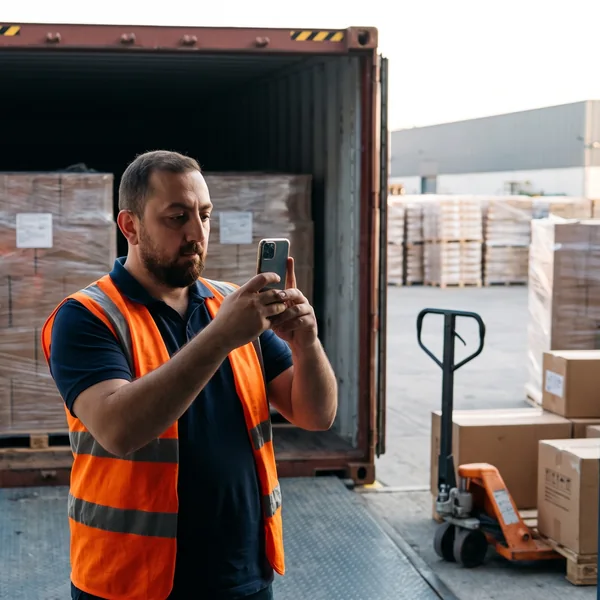
We photograph the load pallet by pallet before the doors close, and the photographs go to you. It is a small habit that settles most arrival questions before they become claims.
What arrives with the goods
Commercial invoice, packing list per pallet, EUR.1 under the free trade agreement, analysis report and an aflatoxin certificate where required. Serbia is outside the EU, so an A.TR does not apply here; origin is proved by the EUR.1, or by an invoice declaration where the consignment value allows it.
The Serbian label content travels separately from the freight question but on the same timetable: prepared from our technical data sheet, confirmed by you as the responsible importer, and approved in writing before artwork goes to print.
What to send, and what comes back
Send the product references and the quantity per line, the border crossing or the delivery address, and the delivery term you want quoted. Say whether the load is going out in the warm months, because that decides the reefer question before it decides the price.
What comes back is a written offer in US dollars or euros within two working days: price and minimum per line, carton format, the route and the transit, the term, and the origin document that travels with the trailer. The quotation is valid thirty days from its date unless it states otherwise, and prices are not quoted in dinars.
Does Serbia have a port?
No, it is landlocked. Delivery is by road trailer through Bulgaria, or sea to Thessaloniki or Bar with onward haulage; the offer names the border or the delivery address instead of a port of arrival.
Who arranges the freight?
We can, on CIF or DAP terms. On FCA Gaziantep you arrange it. The offer states which term applies and what is included.
How is temperature handled?
Chocolate travels at +18/+20 °C and we quote a reefer for warm-month mixed loads. If you choose a dry trailer instead, that decision and its risk are recorded in writing before loading.