The first leg is three hours of road
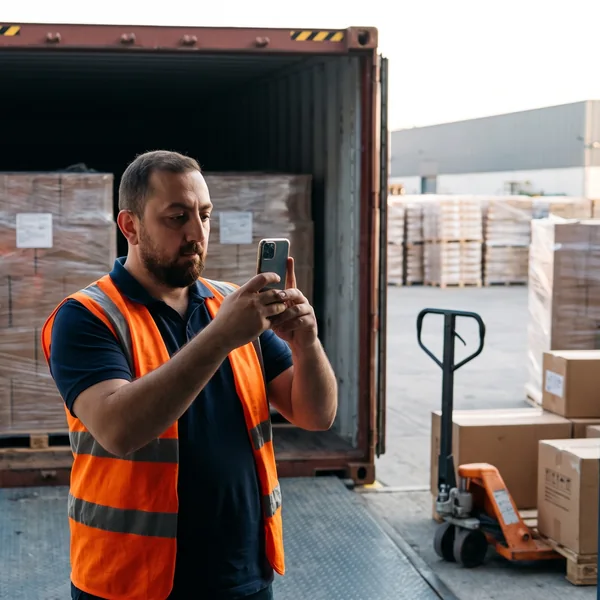
Nothing here starts at a port. The producers sit in Gaziantep, and the lines you order — tablets and wrapped bars, dragées, boxed Turkish delight, jellies, spreads in jars — are collected into one load before anything moves. Mersin is about three hours away by road, so consolidation and loading fall inside one short window.
Where the load becomes yours is a choice at the offer stage. On FCA Gaziantep it is yours at the loading bay; on FOB Mersin the road leg stays on our side and the handover is at the quay.
An island leg, with a stop already inside it
There is no border to drive to here: the arriving leg is sea, and rarely a direct call. A box loaded at Mersin is relayed through a transhipment hub — two vessels, and a wait between them.
Set that stop against the ones already in the chain: chocolate arrives led by the United Arab Emirates at 23.5 per cent, France at 23.0 and South Africa at 15.5; confectionery by the Emirates at 33.0, South Africa at 18.0 and Malaysia at 8.3. A column records where a consignment shipped from, not where it was made — a relay changes the vessel, a hub changes the owner.
Four terms, and what each one moves
The terms quoted are FCA Gaziantep, FOB Mersin, CIF and DAP; what separates them is not price but where cost and risk change shoulders. FCA and FOB leave the ocean booking with you. CIF puts the sea leg on our side to a named port of discharge; DAP carries it to a point you name.
The declaration stays with the importer under all four, and whichever you take is written on the offer beside the price and the case weight for that line.
Tropical at both ends, so the reefer is not seasonal
On a northern lane the cold question arrives with the summer. This route is warm along its whole length, and the wait at the relay port is warm too, so the reefer is decided per line, not per season.
Chocolate and chocolate-coated lines are quoted in a reefer, with the cold chain booked for the whole journey, not the sea part alone. Turkish delight, dragées, jellies and wrapped confectionery travel dry, both kinds share one box (mixed container), and the offer names the reefer lines.
Who declares, and which papers travel
The declaration belongs to the importer, and so does the description it carries; your clearing agent confirms what the file needs on the day. The offer names the origin document and the rules that apply in the form valid then, rather than a figure printed here that would be stale before you sail.
Our side of the file is the technical data sheet per product, our certificates— issued for our factory, with the certifying body identified — the analysis report per line,and (how we work).
The label in English, and the list that opens the file
English carries the mandatory content: the name of the food, the ingredients with allergens, metric net weight, storage conditions, the date marking and the importer’s name and address. Much of what lands here ships from a French-speaking origin, so French alongside is a normal request. One rule holds in either language: a vegetable-fat coating is a compound or a glaze, never chocolate — in the European Union it may not be labelled as chocolate at all.
Send the lines you want priced, the format and quantity for each, the port of entry and the term you prefer; the offer comes back in writing. Couverture, bulk chocolate by the kilo, cocoa, baklava, halva and tahini are sourced on request: composition and format are confirmed before quoting. Tell us what thefirst container should carry.
Does a container from Mersin sail directly to the islands?
Usually not. The leg out of Mersin is normally relayed through a transhipment hub, so the voyage involves two vessels and a connection between them. The offer names the routing, the transhipment point where there is one, the port of entry and the delivery term, and your forwarder confirms the schedule for the sailing you book rather than a transit figure written in advance.
Which delivery term should we ask for?
It depends on who books the ocean leg. FCA Gaziantep hands the container over at the loading bay and FOB Mersin at the quay, which suit a buyer who already has a forwarder and a rate; Mersin is about three hours from our factory by road. CIF puts the sea leg on our side to a named port of discharge, and DAP carries it to a point you name. The entry declaration stays with the importer under all four.
Who answers for the declaration, and what does the supplier hold?
The declaration and the description on it are the importer’s, and your clearing agent confirms what the file requires on the day; the origin document and the rules that apply are named in the offer in the form valid then. Our side holds the technical data sheet per product, the analysis report per line. Certificates are issued for our factory, with the holder and thecertifying body identified.