The handover point, not the figure beside it
Four terms are quoted, and the figure beside each matters less than the question it answers: where do the goods stop being ours and start being yours? FCA Gaziantep hands them over loaded at our factory gate; FOB Mersin takes them as far as the ship; CIF adds the ocean leg to the port you nominate.
DAP goes further, to the address you write down: in a country reached only overland it prices the truck leg instead of letting it surface later as somebody else’s bill.
Three hours to the coast, then the long part
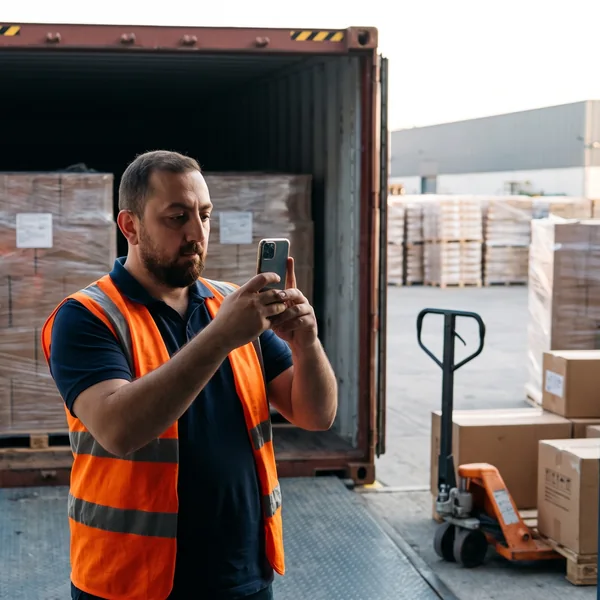
Loading is in Gaziantep, roughly a three-hour drive from the coast at Mersin. A short first leg is what makes a mixed load practical: cartons from our own factory meet in one bay, are checkedagainst the packing list and leave as one box (mixed container).
Then the box is handled again, discharged in a neighbouring country and trucked on to you. Tell us which port you clear through and how long the overland stretch takes: the first sets the schedule, the second decides which products belong in the load.
What the origin columns say about the route
Read the declared sources for 2024 as a map rather than a ranking. In chocolate the biggest is Côte d’Ivoire at 33.1 per cent: an immediate neighbour, so those cartons cross a land border rather than a quay. In sugar confectionery 54.2 per cent comes from India — an ocean voyage with the same truck leg bolted on the end.
Both finish on the same road. What separates them is how many desks a carton passes on the way, and each adds a margin, a conversion and another account of when the batch was made.
Who lodges the declaration
Your clearing agent lodges the entry and stands behind the description. Where a consignment lands at a foreign port and moves on under transit, the declaration that decides your landed cost is made at the end of the road, not at the quay. The offer names the entry port, the overland stretch, the transit documents and the declaring office, with the origin paper and the applicable rules as they stand that day.
The supply file is identical on every order: a technical data sheet per product, our certificates, an analysis report and.Certificates are issued for our factory, with the issuing body identified.
Heat belongs to the truck, not to the vessel
The overland stretch is where warmth does its work. Cocoa lines are priced in refrigerated equipment across the hot season; the sugar side — Turkish delight, dragées, jellies, boiled sweets — rides dry, and one load holds both. Say whether the final leg and your store are cooled: the answer can change the product, not just the packing.
Where a line must survive an ambient warehouse, a vegetable-fat coating may serve better — and is then called a compound wherever it is written down: specification, wrapper, price list. In the European Union such a coating cannot be labelled chocolate.
The French panel, and what to send
The compulsory text is French, with English beside it where your file or shelf wants it: product name, ingredients and allergens, metric net weight, storage, importer details and date marking. Own-label wording comes from our data sheet and is checked against your artwork beforeprinting. The jarred line is a spread.
So send the references you want priced, the format of each, a rough quantity, the delivery address rather than only the country, and whose brand goes on the wrapper. Couverture, bulk chocolate by the kilo, raw nuts, cocoa, baklava, halva and tahini sit outside the range: sourced on request, composition and format confirmed beforequoting. Ask for two terms at once (how we work).
We are landlocked. Which delivery term should we ask for?
DAP is the one to measure the others against, because it puts a price on the overland stretch to the address you name instead of leaving it open. FCA Gaziantep suits a buyer arranging his own freight from origin, FOB Mersin stops at the ship, and CIF covers the ocean leg to the port you nominate. Ask for the same list on two terms and compare what moves between them.
The goods land in a neighbouring country. Who files the entry?
Your clearing agent does, and stands behind the description given; the consignment travels on under transit and is declared where it comes to rest. The entry port, the overland stretch, the transit documents and the declaring office are written into the offer, together with the origin paper and the rules as they stand that day. From our side you receive a technical data sheet, our certificates and an analysis report per line.
Which language does the pack have to carry?
French for the compulsory text, with English beside it where your file or your shelf calls for it: product name, ingredients and allergens, net weight in metric, storage, the importer’s details and the date marking. On lines in our standard packs we check what the export wrapper already shows; on own-label runs thewording is built from our data sheet and matched against your artwork before printing.