Two tables, one country
On the most recent full year Czech chocolate imports (HS 1806) were worth about 811.9 million dollars. Germany took 27.64 per cent, Poland 14.96, Belgium 14.67 and Italy 7.07, then Slovakia at 6.69, France at 5.56 and Austria at 5.41, with Hungary, the Netherlands and Bulgaria closing the top ten. Türkiye was fifteenth, on 0.81 per cent.
Sugar confectionery (HS 1704) is a smaller market, about 212.7 million dollars, and the order changes. Germany leads on 29.25 per cent and Poland follows on 13.74, but then come Ukraine at 7.22, Spain at 7.18, Hungary at 4.98 and China at 4.72 — and Türkiye seventh, on 4.63 per cent.
The price per kilo underneath
Share hides the other half. Turkish chocolate arrived at about 7.90 dollars a kilo — above German product at 6.60, close to Poland at 8.16 and Belgium at 8.13, under Italy at 9.49. The small share is not a cheap-goods position but a narrow one.
Confectionery reverses it. Turkish product came in at roughly 4.30 dollars a kilo, below Germany at 5.33 and Poland at 5.50, though clear of Ukraine at 2.24 and Spain at 2.48: the profile of a working line, bought by the kilo rather than by the gift box.
The lines that carry the volume
So the door into Czechia is the confectionery half: those lines move without re-educating a shelf. Lokum goes both ways, bulk and retail box. Gelled sweets and popping candy travel in bulk cartons, sized for the weigh-out counter. Dragées and sugared almonds are sorted by colour and calibre, with chocolate-coated nut and fruit centres in the same part of the order.
Colour and calibre are worth settling at enquiry stage: a pick-and-mix wall is bought to a palette and a size band, not to a product name.
The chocolate side: two or three that differ
The chocolate half is entered differently — not against the tablet Germany and Poland already deliver at scale, but with the few items the shelf does not carry. The pistachio and kadayıf filled bar in the Dubai style is the clearest. Beside it, whole-pistachio lokum and double-roasted lokum: the same family as the volume lines, at another level of finish.
One naming point travels with that bar: in the EU a vegetable-fat coating cannot be labelled chocolate, and some bars in this style are compound coated. The offer states per line whether the coating is chocolate or a cocoa glaze.
One container, two temperature regimes
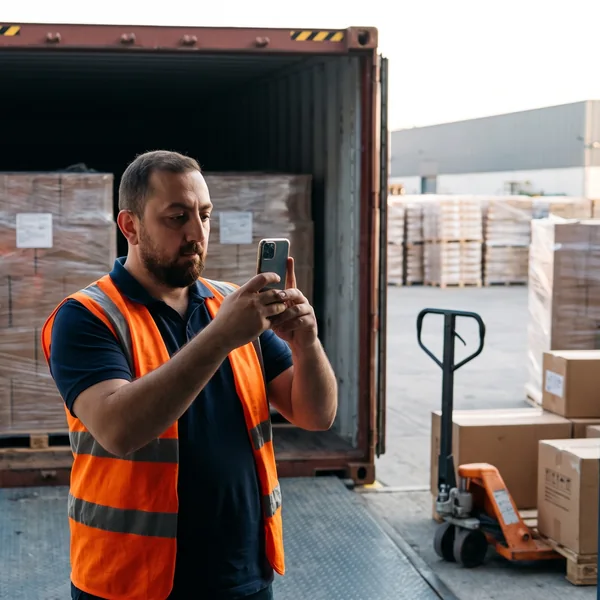
Both halves fit one mixed container, and the minimum is per line — written into the offer, not per container. A first order can carry six or sevenreferences in measured quantity, each on its own pallet, under one packing list and one movement certificate. Czechia is in the EU, so processed confectionery moves under the customs union on an A.TR movement certificate; the offer states what applies on the day.
Temperature is the split that needs planning. Lokum, dragées and gelled sweets travel dry all year. Chocolate and chocolate-coated lines want +18 to +20 °C, so a refrigerated container is offered in the hot months; if a dry one is preferred, that risk passes to the buyer in writing, before loading. In a mixed load the regime is stated group by group.
What to send
Send the references with a quantity against each, the delivery address or port, and whether the confectionery is going to a weigh-out counter or to pre-packed retail, since that decides the carton. The written offer follows within two working days: per line the technical specification, ingredients and allergens, net weight, carton and pallet data, minimum and tariff heading. Certificates are held for our factory; we pass copies. Payment is 50 per cent at order and 50 before the container leaves, against loading photographs.
Why start with confectionery rather than chocolate?
Because that is where the market already buys. Türkiye was the seventh source of Czech sugar confectionery imports at 4.63 per cent, against fifteenth and 0.81 per cent in chocolate. The confectionery lines need a format discussion; the chocolate lines need an introduction.
Does a mixed container mean a higher minimum?
No. The minimum is set per line and stated in the offer, not per container. That is what lets a first order carry six or seven references in measured quantity, each onits own pallet.
Can chocolate and lokum travel in the same container?
Yes, with the regime agreed group by group. Lokum, dragées and gelled sweets go dry all year; chocolate and chocolate-coated lines want +18 to +20 °C, so a refrigerated container is offered in the hot months. If a dry container is preferred instead, that temperature risk passes to the buyer in writing before loading.