The leg before anything floats
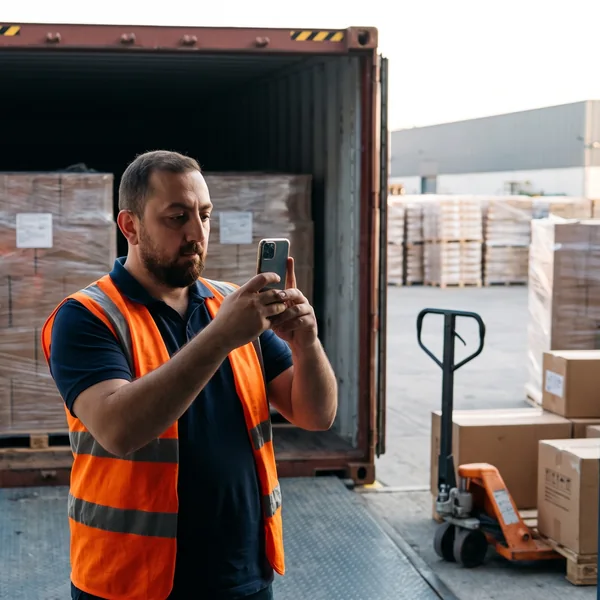
Our factory is in Gaziantep and so is the loading. Cartons from our lines come into one bay, are palletised and counted there, and the box is sealed before it moves. On a mixed load that matters: chocolate, dragées, Turkish delight and spreads in jars from different lines are easy to short-ship if the container is filled at a port rather than at origin.
Mersin is about three hours away by road — the one leg where every carton is handled by people we can telephone. The loading photographs come from that bay.
What each delivery term hands over
Four terms are quoted, and they differ in one respect: where the goods stop being ours and start being yours.
FCA Gaziantep hands the sealed box to your forwarder at origin. FOB Mersin moves that line to the ship, so the road leg is ours and the freight yours. CIF adds sea freight and insurance as far as your port of discharge. DAP carries it to a named delivery point, with import clearance still yours. Choose by what your own forwarder already does well.
The last days are the hot ones
The coast at the far end is a Red Sea coast — a short way of saying the container finishes hot and may wait in the heat. Load against that, not against the weather on the day of sealing.
Chocolate and chocolate-coated lines are quoted in a reefer through the warm months; Turkish delight, dragées, jellies and wrapped confectionery travel dry and share the same box. If the reefer cost is hard to carry on a first order, say so before production: coating, format and pack are chosen with the loading season in mind, and changing a specification beats discharging a bloomed pallet.
Who declares what
This file is national. No regional movement certificate carries it and no European conformity declaration sits behind it — those belong to other routes. What applies on the day is named in the offer, and your clearing agent confirms it.
The consignment travels with the technical data sheet per product, the analysis report per line. Certificatesare issued for our factory; lines with ingredients of animal origin, gelatineabove all, travel with our halal certificate, and the offer names the certifying body. Youhold the registration and file the entry.
The label is set by your file, not by ours
English, Arabic and Tigrinya are all in everyday use here and we will not guess which your import file requires. If it is Tigrinya, send the wording: we place it and check it against the artwork rather than translate it ourselves.
Content is prepared in English and, where you want it, in Arabic, taken from our technical data sheet: name of the food, ingredients with allergens,metric net weight, storage conditions, importer’s name and address, date marking. Two words never move: a vegetable-fat coating is a compound or a glaze, never chocolate — in Europe it may not be labelled chocolate at all — and the jar line is a spread.
What to send so the route can be priced
A route cannot be priced from a product list alone. Send the references, the format and case weight for each, the delivery term you prefer, the delivery point at the far end, the importer of record as it should appear on the pack, and whether the label stays in our standard pack or carries your brand — nothing printed without your approval.
The answer comes back in writing, line by line: price, case weight, delivery term, payment schedule and document set (mixed container, how we work). Couverture, bulk chocolate by the kilo, raw nuts and dried fruit sit outside the range: sourced on request, with composition and format confirmed before quoting.
Which delivery term should we ask for?
The one that matches what your forwarder already does. FCA Gaziantep hands you the sealed container at origin; FOB Mersin puts the road leg on us and the freight on you; CIF adds sea freight and insurance to your port of discharge; DAP carries it to a named delivery point with import clearance still yours. If you hold a freight contract of your own, ask for FOB and compare it against a CIF price rather than assuming the larger term is the cheaper one.
Who declares the goods on arrival, and whose certificates are they?
You do. The importer of record holds the registration, files the entry and answers for the description given; no supplier abroad can take that position for you. Our side is the supply file: the technical data sheet per product, the analysis report per line, and our halal certificate on lines with ingredients of animal origin, gelatine in jellies above all. Certificates are issued for our factory, and the offer names the certifying bodyper line and states what applies on the day.
Which language does the label need?
Your import file decides that, and you are better placed to read it than we are. We prepare the content in English and, where you want it, in Arabic, taken from our technical data sheet. If Tigrinya isrequired you supply the wording and we place it and check it against the artwork, rather than translating into a language we cannot check ourselves. On lines in our standard packs we confirm what the export pack alreadycarries before you order.