Three hours to the ship, one packing list
Our factory is in Gaziantep and Mersin port is about three hours away by road. That short firstleg is what makes a mixed load practical: lines from our own factory come into one bay, are checkedagainst the packing list and go into one box, rather than being consolidated downstream by a party neither of us has met (mixed container).
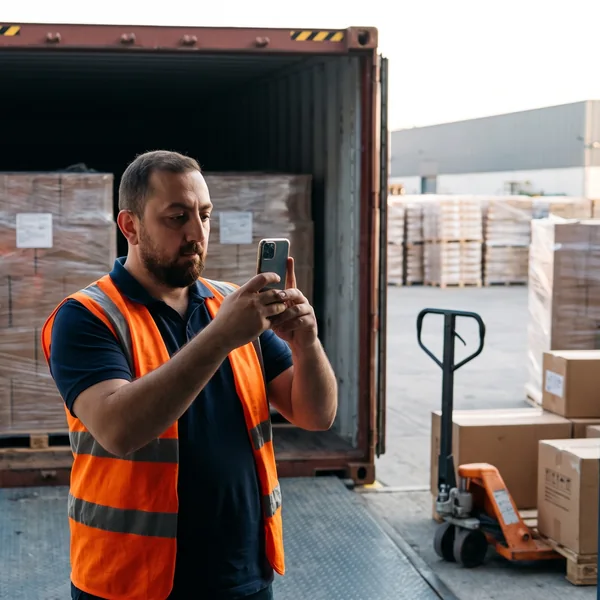
It also keeps the loading window short enough to photograph, and the balance settles against those photographs.
Where the goods stop being ours
Four delivery terms are quoted, and what separates them is not the figure beside each but the point where risk changes hands. FCA Gaziantep hands the goods over loaded at origin, leaving road, sea and entry to you. FOB Mersin carries them to the port; CIF adds the sea leg to the port of entry named in the offer.
DAP runs to the delivery point you name — the term to ask for when goods travel on after discharge, since it prices that run instead of leaving it a surprise. Ask for one list on two terms and compare.
A port of entry that is also a forwarding point
The origin columns read as route maps. Against chocolate imports of 1,441,334 US dollars, 44.0 per cent arrives from France and 33.5 from India, both long sea legs, while the third source at 12.1 is a neighbour on this same coast, a short regional run. Sugar confectionery, 3,044,764 US dollars, leans further still: China at 60.7 per cent.
Not everything landed on this coast stays on it. If part of your consignment is booked past your own warehouse, say so while the offer is drafted: the route, the transit and the document set are written differently when goods move on.
Reefer or dry, and the leg after discharge
Temperature is settled in the same offer rather than at the quay. Through the warm months a reefer is quoted for chocolate and for anything coated in it, while lokum, dragées, jellies and wrapped lines ride dry, and one box can carry both.
Which way it goes is a route question, not a product one. If the run after discharge is not cooled, the answer is to weight the box towards the dry lines and put the chocolate on a cooler month — which is why the offer asks for the delivery point, not only the country.
Who files the entry, and what travels with the box
The entry is filed on your side: your clearing agent lodges it and answers for the description given, and no supplier stands in that position for you. The origin document and the rules that apply are named in the offer in the form valid on the day — regional arrangements on this coast change often enough that printing one here would age before you read it.
Our half of the file does not change: technical data sheet per product, analysis report per line, our certificates. Certificates are issued for our factory, so we name the holderand the certifying body.
The panel in French, and what to send
The mandatory content goes on in French, with English alongside where your shelf wants it: food name, ingredients with allergens, metric net weight, storage conditions, your name and address as importer, the date marking. Own-label content is drawn from the technical data sheet and checked against your artwork before printing. A vegetable-fat coating is a compound or a glaze wherever it is written, never chocolate — in the European Union it may not be labelled chocolate at all — and the jarred line is a spread.
Send the lines, the format for each, an indicative quantity, the delivery point, and whether the last leg is cooled or continues past your warehouse. The offer comes back in writing (how we work), priced line by line.
Which delivery term should we ask for?
It depends on where you want risk to change hands. FCA Gaziantep suits a buyer who arranges his own freight; FOB Mersin stops at the port; CIF covers the sea leg to the port of entry named in the offer; DAP runs to the delivery point you name, which is the one to ask for when the goods travel on after discharge. Ask for the same list on two terms and compare.
Part of our order is not staying in the country. Does that change anything?
Yes, and it is cheaper to say so before loading than after. The route, the transit and the document set are written differently when goods move on past your warehouse, and the delivery term is chosen against the last point you actually control. Your clearing agent files the entry and answers for the description given; the origin document and the rules that apply are named in the offer in the form valid on the day.
Does the whole container have to be a reefer, and can you add lines outside your range?
No. A reefer is quoted for chocolate and for anything coated in it through the warm months; lokum, dragées, jellies and wrapped lines ride dry, and the two can share one box. Tell us the delivery point and whether the leg after discharge is temperature-controlled, and the mix is built around that. Couverture, bulk chocolate by the kilo, raw nuts, dried fruit, cocoa, halva, tahini and baklava sit outside the range: sourced on request, and we confirm composition and format before quoting.