Why the table is a mirror — and what it cannot count
A normal trade table comes from the importing country's own customs office. This one is assembled backwards, out of partner declarations. That has one honest consequence: a supplier country that does not report simply is not in the table. It did not send nothing; it reported nothing.
So treat the headline value as a floor, never as the size of the market. Goods that change hands in a third country before arriving can also land under the wrong flag. What survives all of this is the shape of the table — who is present, in what order, with what weight. The arithmetic total does not.
Where Türkiye stands in the mirror
On partner-reported exports for 2024, chocolate into Russia shows about 591.9 million dollars. Germany leads with 37.50 percent, then Poland at 10.89, Belgium at 9.88, Italy at 7.44 and Kazakhstan at 7.28. Türkiye is sixth, at 7.10 percent.
Sugar confectionery tells a different story: about 235.3 million dollars, with China at 31.92 percent, Germany at 19.10 percent and Türkiye third at 12.26 percent. Only two origins sit above it. Read the two lines side by side and the instruction is plain: one category where Turkish supply is established, one where it is still the challenger.
Turning a ranking into a first order
On the established side the opening lines can be the familiar ones: Turkish delight plain and filled, jelly sweets and popping candy in bulk cartons for weigh-and-pay shelves, dragées sorted by colour and calibre, and chocolate-coated nuts and fruit centres.
On the chocolate side, sixth place behind long-established European origins is not a price fight worth picking. The way in is the line the shelf does not already carry: the pistachio and kadayıf filled bar, whole-pistachio delight and double-roasted delight. These are regional pistachio products, not a cheaper version of something the buyer already lists.
The Eurasian Economic Union frame
Russia is a member of the Eurasian Economic Union, so imported food answers to the Union's food safety and labelling technical regulations and carries the EAC conformity mark. The declaration of conformity is held on the importer's side. From the supplier side goes what the importer needs to raise it: our technical specification, ingredients and allergens, net weight, batch analysis report and the customs tariff position.
The consumer label is in Russian. On private label work the label text is drafted from the manufacturer's specification, and nothing goes to print without written approval. Duty is not something to quote from an article: the offer states what applies on the day.
How one container carries several lines
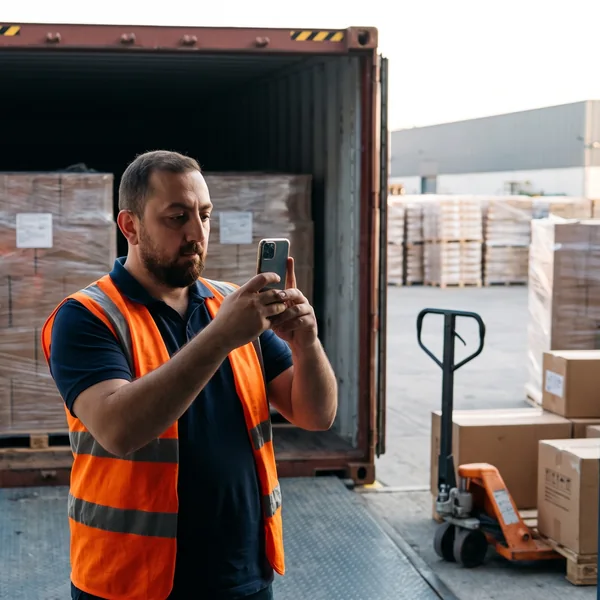
The unit of sale is a full container or a full truck; there is no groupage. The minimum is per line, set per line, and it is written into the offer — it is not a minimum per container. That is why a first order can carry six or seven items in measured quantity instead of a pallet-deep bet on one.
Each line travels on its own pallet, under a single packing list and a single movement document. Line by line the offer names the specification, carton and pallet data, the minimum and the tariff position. Certificates are issued for our factory; copies are available on request.
Temperature, and what to send us
Chocolate and chocolate-coated product travel at +18/+20 °C. Through the hot months a refrigerated container is offered; if a dry container is preferred anyway, the temperature risk passes to the buyer in writing, before loading. Turkish delight, dragées and jelly sweets go dry all year.
Send the destination port, the lines you want quoted, and whether the work is under our label or yours. A written offer follows within two working days. Payment is 50 percent at order and 50 percent before the container leaves, against loading photographs; the rest of the sequence is under how we work.
If Russia publishes no customs data, how reliable are these figures?
They come from what partner countries report exporting to Russia, so the order of suppliers and their relative weight are reliable enough to plan with. The overall total is not: any origin that does not report is missing from the table entirely, which makes the headline value a floor rather than a measurement.
Who holds the conformity declaration and who prepares the Russian label?
The declaration of conformity sits with the importer, together with the EAC marking obligation. We supply what feeds it from the production side — technical specification, ingredients and allergens, net weight, batch analysis and tariff position — and we draft label text from the manufacturer's specification for written approval before printing.
Can a first container mix confectionery and chocolate lines?
Yes. The minimum applies per line, not per container, so established confectionery items and a smaller trial of pistachio-based chocolate lines can travel together. Each line gets its own pallet under one packing list, and chocolate lines set the temperature regime for the whole load.