Two searches, two different buyers
The Romanian-language search finds the importer-retailers who already bring Turkish goods into Romania — useful if you want a pallet next week. The English search finds directories and marketplaces, which is where you look when you want to buy nearer the producer and are prepared to take a container. Knowing which question you are asking saves time. It also explains why the two result sets barely overlap: one is a domestic distribution channel, the other an export channel, and a supplier who fits one may be no use in the other.
What a directory listing does not tell you
A listing gives you a company name and a category. It does not tell you the minimum per line, whether the certificates are held by the factory or by a trader, what the case weight is, or whether the goods can carry your label. Those four things decide whether a shipment is possible, and none of them appear in a directory row. Nor does it say who prepares the Romanian label, whose name and address go on it, or which lines are quoted at +18/+20 °C. Each becomes a cost after the goods are booked rather than before.
The questions worth asking a supplier directly
Are you the producer or the exporter, and whose name is on the certificates? What is the minimum, and is it per line or per container? What is the case size and the pallet plan? Which document travels with the goods to Romania? Our answers are the same every time: we are the manufacturer in Gaziantep, the certificates are held for our factory, the minimum is per line, and the shipment moves on an A.TR under the EU–Türkiye customs union. Two more are worth adding while you are asking: what is quoted under temperature control, and who declares the road movement inside Romania in the RO e-Transport system.
The words the offer uses
Romanian names for these goods are specific, and the wrong one costs a round of e-mails. Lokum is rahat or rahat turcesc, and rahat cu fistic for the pistachio filling. The jar is cremă de fistic: a spread rather than a dairy cream, with the pistachio percentage taken from our technical data sheet, while the industrial pastă de fistic is a different line and sits outside the core range. Dragées are written drajeuri de ciocolată and never drajeuri alone, which reads as a pharmacy product here. Dubai-style bars are ciocolată Dubai, and kadayıf is kadaif. Where a line is a compound coating rather than chocolate, EU rules do not allow it to be called chocolate, and the offer says so per line before a pack is printed.
What one container actually looks like
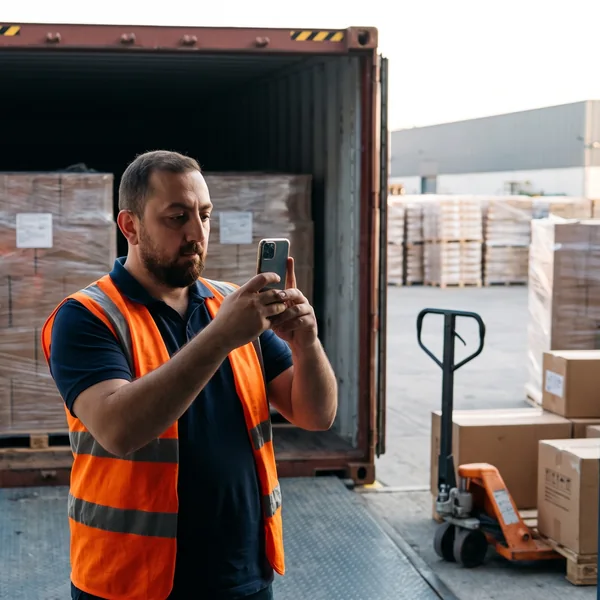
Not a pallet of one item. Six or seven lines in modest quantities — pistachio chocolate, dragées, Turkish delight, a spread — each on its own pallet, under one packing list and one certificate of origin, photographed pallet by pallet before the doors close. That is the shape that fills a Romanian shelf rather than a Romanian warehouse. Seasonal lines fit the same load: bulk rahat for the cozonac season is bought months before the ovens are lit, so the cut and the carton are agreed early.
What to send, and what comes back
A list is enough to start: the product references, the quantity you have in mind per line, and the port or border of arrival. Within two working days the offer comes back in writing, in US dollars or euros, valid thirty days from its date: ex-works price per line, case size, the pallet plan, the lead time, the certificate holder per line, and the document that travels with the container. Prices are not quoted in lei. If a line on your list is outside the core range, the offer names it as sourced on request instead of leaving it in the list unmarked.
Are you a producer or an exporter?
Both. We make the products in our own factory in Gaziantep and export them ourselves; the certificates are held for our factory.
What is the minimum?
One full container, 20 ft or 40 ft, mixed across as many lines as you like. We do not ship part loads. The minimum per line is stated in the offer.
How long does an offer take?
In writing, within two working days of your list: ex-works price per line, case size, the pallet plan and the lead time for each line.